
In this article
- Key Takeaways
- What a Truck Yard Security Plan Has to Cover
- Step 1: Assess Your Risks Before You Buy Anything
- Step 2: Secure the Perimeter
- Step 3: Control the Gate
- Step 4: Add Video and Alarms Where the Risk Is
- Step 5: Put People in the Plan
- Step 6: Write Down Incident Reporting
- Truck Parking Areas and Staging Lots
- Match the Plan to the Kind of Yard
- A Simple Review Schedule
- How GuardEX Can Help
- FAQ
- Sources
- Recommended
A truck yard security plan is a written document that names what you are protecting (tractors, trailers, cargo, equipment, people), the risks at your specific site, and the layers of people, technology and procedure that address them. The strongest plans pair a documented risk assessment with controlled gates, lighting, video and trained personnel, then review all of it on a schedule. For New Jersey yards, GuardEX builds site-specific plans around each property’s risks and operations, and offers armed and unarmed guards, mobile patrols, remote monitoring, access control and video security. You can see how that applies to yards on our trucking yard security page.
This guide walks property managers, logistics operators and warehouse owners through the plan in the order you would build it.
Key Takeaways
- Start with an assessment: inventory assets, review incidents and local crime records, walk the site, then rank risks by likelihood and consequence.
- Control the gate first. Fewer entry points, positive identification, visitor logs and documented access-device control do more than any single camera.
- Layer people, technology and procedure so one failed safeguard does not defeat the whole plan.
- Write down incident reporting and unauthorized-entry procedures, and review the plan on a regular schedule.
- General guidance in this article is not a legal compliance determination. Confirm New Jersey licensing and insurance requirements with the relevant authority and your carrier.
What a Truck Yard Security Plan Has to Cover
A yard is different from a warehouse. Assets sit outdoors, vehicles come and go at all hours, and drivers, vendors and visitors share the same ground. Customs and Border Protection treats the yard as the starting point of the highway carrier supply chain: its C-TPAT Highway Carrier Security Criteria say the scope begins where tractors and trailers are stored and runs through pickup and distribution.
C-TPAT is a federal supply-chain security program, not a New Jersey rule. Even if your company is not enrolled, its criteria are a practical checklist to measure your own yard against.
A workable plan answers six questions:
- What are we protecting, and what is it worth to the operation?
- Who and what can get into the yard, and how?
- How do we know who is on site right now?
- What do we see, and who is watching?
- What happens when something goes wrong?
- Who reviews the plan, and how often?
The sections below follow that order.
Step 1: Assess Your Risks Before You Buy Anything
CISA’s Security Planning Workbook lays out a sequence that fits a truck yard well: inventory your assets, review past threats and local crime records, inspect the site and your procedures, identify vulnerabilities, then prioritize risks by likelihood and consequence. It also says assessments should include stakeholder interviews, onsite observation, policy review and public records such as local crime statistics, and that findings should be documented and revised regularly.
Applied to a yard, that looks like this:
- Assets. List tractors, trailers (loaded and empty), fuel, tools, cargo, trailer contents, records and the people on site each shift. A truck inventory checklist helps you know what is parked where before you decide what needs the most protection.
- History. Pull your own incident reports, near-misses, insurance claims and any local police reports for the area. Note the time of day and the entry point for each.
- Walk the site. Do it once in daylight and once after dark. Look for dark corners, gaps in fencing, blind spots behind trailers, and gates that stay open during busy periods.
- Interview. Ask dispatchers, yard hostlers, drivers and gate staff where the procedures break down. They know which shortcuts happen at 5 a.m.
- Rank. A frequent, low-cost problem (tailgating through the gate) may outrank a rare, dramatic one. Rank by likelihood and consequence, then spend in that order.
Put the result on paper. A one-page risk register with the risk, location, likelihood, consequence and the control you chose is enough to start.
Step 2: Secure the Perimeter
The C-TPAT criteria call for fencing around the yard that is inspected regularly, and for lighting inside and outside the facility. The CBP security profile overview specifically names entrances, exits, rolling-stock parking and storage areas, and fences as places that need adequate lighting.
In practice:
- Fence inspection is a task with an owner. Assign someone to walk the line on a schedule and log damage, cuts, washouts under the fence and vegetation that hides activity.
- Lighting follows the plan, not the other way around. Light the gate, the trailer rows, the fence line and the walking routes to the office. Dark spots behind staged trailers are common and easy to miss until you walk the yard at night. Our guide to parking lot security for NJ managers explains why fixing shadows comes before adding cameras.
- Keep sightlines open. The AIA’s secure parking guidance recommends clear sightlines and adequate lighting, along with perimeter controls such as fencing, gates, berms, shrubs or bollards.
- Store trailers deliberately. C-TPAT includes secure trailer storage. Park loaded trailers where they are visible from the gate or a camera, and keep landing-gear and kingpin locks in the routine if your cargo warrants it.
Step 3: Control the Gate
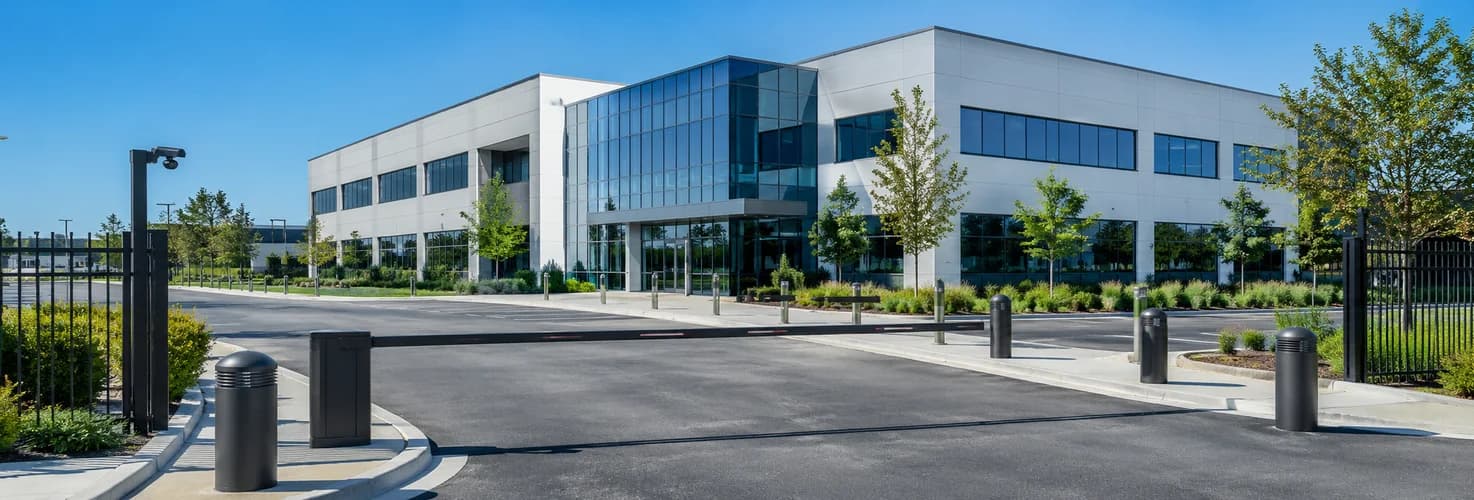
Most of a yard’s exposure comes through its entrances. The C-TPAT criteria point toward minimizing the number of gates, keeping them manned or monitored, positively identifying people and vehicles, and restricting access to those with a reason to be there.
A gate procedure that holds up has these parts:
- One way in for trucks, one way out, with any additional gate locked and checked on a schedule.
- Positive identification of every driver and visitor, not a wave-through for familiar faces.
- A visitor log and temporary badges. The criteria call for visitor ID logs and temporary badges, which also tell staff at a glance who is authorized to be where.
- Documented control of badges and access devices. Record who holds each badge, fob or code, and remove access the same day someone leaves.
- Conveyance records. Log trailer numbers, seal numbers, times in and out, and the driver, so a missing trailer can be traced to its last known event.
- A rule for exceptions. After-hours deliveries, damaged seals and unrecognized drivers need a written response and a person to call.
Our article on truck gate security checks, records and staffing goes deeper on what to check and what to record. When a yard needs the identification and records step handled by a person on site, GuardEX provides armed and unarmed security guards and access control systems that can be matched to your gate volume and hours.
Step 4: Add Video and Alarms Where the Risk Is
CBP’s criteria say alarms and video surveillance cameras should be used, based on risk, to monitor premises and prevent unauthorized access to cargo handling and storage areas. The words “based on risk” matter: your assessment from Step 1 should decide where cameras go, not a standard count per acre.
Useful placement priorities for a yard:
- Gate lanes, with a view that captures faces, plates and trailer numbers
- Trailer storage rows and any loaded-trailer staging area
- Fuel and equipment storage
- Fence lines that border roads, woods, rail or water
- Office entrances and employee parking
Cameras record events. They do not respond to them. A camera nobody watches is evidence after the fact, so decide in advance who sees an alert, how fast they act, and what they do. GuardEX offers video security systems planning and installation, and remote security monitoring for sites that want footage and alarms reviewed rather than stored.
For trailers and equipment that leave the yard, GPS tracking for trailers and equipment with geofence alerts adds a layer once an asset is outside your fence.
Step 5: Put People in the Plan
Technology covers coverage. People provide judgment. CISA describes defense-in-depth in its security convergence guidance as integrating people, technology and operational capabilities across multiple layers, so one failed safeguard does not defeat the entire program. For a yard, that means a guard at the gate, cameras on the rows, lighting on the fence line and written procedures that connect them.
The main staffing options are:
| Coverage type | What it does | Where it fits in a yard |
|---|---|---|
| Gate guard | Identifies drivers and visitors, checks paperwork and seals, keeps the log | High-volume gates, loaded-trailer yards, 24-hour operations |
| Roving guard | Walks the lot, checks fence, locks and trailer rows | Larger yards, overnight and weekend hours |
| Mobile patrol | Vehicle-based officers visit the site at intervals and report on it | Smaller yards, secondary sites, shifts without on-site staff |
| Remote monitoring | Staff review live video and alarms and escalate events | Closed hours, supplements for guards or patrols |
The AIA guidance says parking patrols should be frequent and parking restrictions and procedures strictly followed. The right frequency for your yard comes from the risk register: when incidents happen, where, and how long a response can take.
Guard coverage works best when the officer’s post orders match the site. That means where to stand, what to check on each truck, who to call, what to write down and when to escalate. GuardEX’s positioning rests on site-specific plans, on-site officer training, clear reporting and ongoing support. See our pages on mobile patrol security and the benefits of mobile security patrols to compare patrol coverage with a posted guard.
Armed or unarmed?
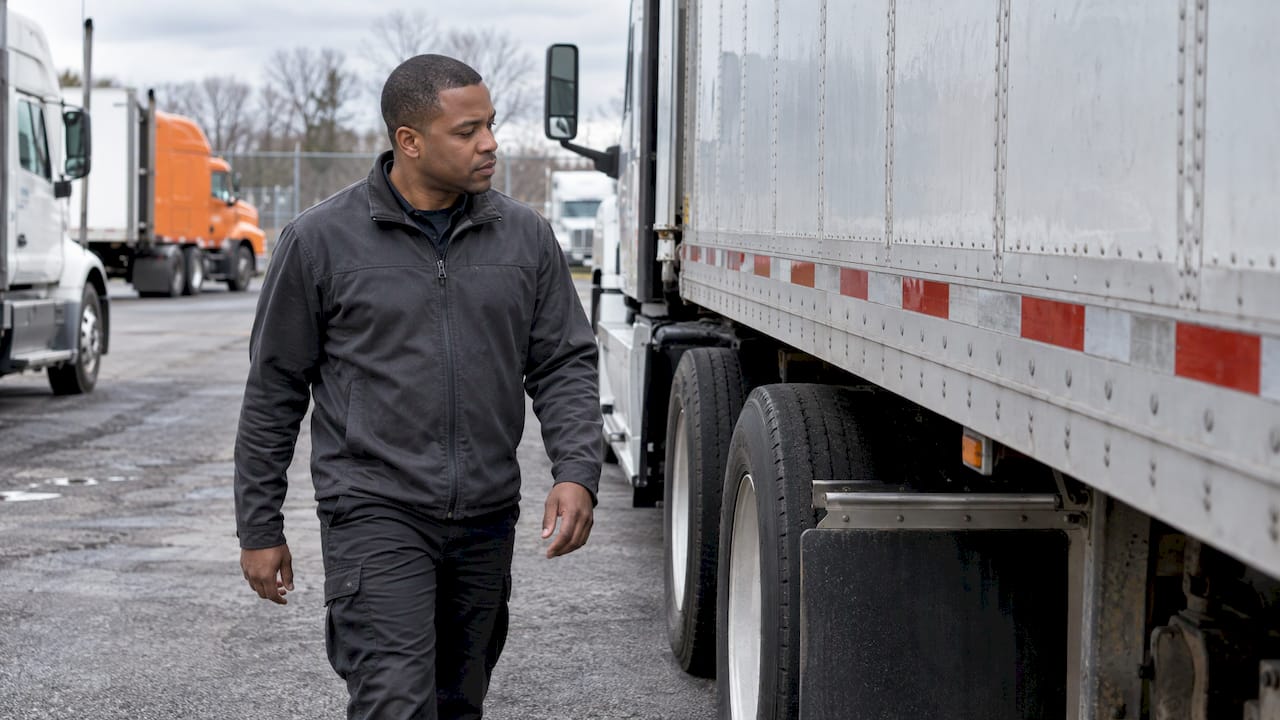
This is a risk decision, not a default. Armed officers are a different level of responsibility for you and your insurer. Discuss the post, the cargo, the hours and your insurance terms with your provider and your carrier before deciding. Both options are available through GuardEX: see armed security guards in New Jersey and unarmed security guards.
Step 6: Write Down Incident Reporting
The C-TPAT criteria include procedures for inspecting conveyances and for reporting unauthorized entry. Treat these as the center of the plan. Without them, a good gate procedure falls apart the first time something unusual happens.
An incident procedure should state:
- What counts as an incident: unauthorized entry, broken seal, missing trailer, tailgating, suspicious vehicle, damaged fence, injury.
- Who is called first, with phone numbers, in order, for each shift.
- When to call 911 and when a supervisor decision comes first. Anything involving a threat to life goes to emergency services without waiting for approval.
- What gets recorded: time, location, people and vehicles involved, trailer and seal numbers, video references and the officer’s name.
- Who receives the report and by when, so that patterns across weeks become visible.
- What changes afterward. If three incidents happen at the same fence section, the risk register and the plan change.
Clear reporting is useful beyond the incident itself. A record of dated, consistent entries helps you review the plan with your own team and discuss claims with your insurer. It does not guarantee any insurance outcome, which depends on your policy.
Truck Parking Areas and Staging Lots
If your site includes truck parking for drivers or customers, the same layers apply. The Federal Highway Administration’s Truck Parking Development Handbook, updated March 2026, says designated truck parking is more secure than undesignated locations, where drivers and cargo face greater exposure to theft, damage and assault. It describes safe truck-parking environments as including lighting and security features such as fencing, cameras or onsite personnel.
For a parking area, plan for:
- Marked, designated spaces with lighting that covers every row
- Controlled entry and exit with monitoring at both points
- Visible sightlines from the gate or guard post
- Rules posted and enforced, with a named person who enforces them
- Patrols or remote monitoring during the hours with the fewest people on site
The same logic carries over to other large, open properties such as golf courses and country clubs: assess the grounds and the surrounding area first, then fit the controls to what you find. A risk management guidebook for golf and country clubs recommends reviewing local police crime reports at least annually. That topic is for club managers and is not the focus of this guide.
Match the Plan to the Kind of Yard
Yards differ, and the plan should too.
- Carrier or fleet yard. Priorities are driver and vehicle identification, fuel and equipment protection, and after-hours coverage. See our trucking yard security services in NJ.
- Distribution or 3PL yard. Many carriers and trailers pass through, so records and seal checks carry more weight. Read our distribution center security layered plan and the guide to loading dock security.
- Scrap, transfer or rail-adjacent yards. Material value, public access and site layout change the risks. GuardEX has pages for scrap yard security, transfer station security and rail yard security.
- Port-adjacent yards. Container and cargo flows add their own rules. See port security services in NJ.
A Simple Review Schedule
A plan that sits in a binder goes stale. Set a rhythm:
| Frequency | Task |
|---|---|
| Every shift | Gate log complete, fence and lighting spot check, patrol notes filed |
| Monthly | Review incident reports, check camera views and alarm tests, audit badge and access-device list |
| Quarterly | Walk the yard at night, reconfirm post orders and call lists |
| Annually, or after a serious incident | Redo the risk assessment, update the risk register, review local crime data and coverage hours |
CISA’s workbook says findings should be documented and revised regularly. The schedule above is one way to do that. Adjust it to your hours and volume.
How GuardEX Can Help
GuardEX is a boutique security company in New Jersey with locally based ownership. We build security plans around each property’s risks and operational needs, so a yard gets coverage designed for its gate, its trailer rows and its hours. Services that apply to a truck yard include armed and unarmed guards, mobile patrols, remote monitoring, access control and video security planning and installation.
To discuss your yard, start with our trucking yard security services page or contact us through GuardEX. Bring your incident history and a site map, and we can work from there.
FAQ
What should a truck yard security plan include?
At minimum: a risk assessment, fencing and lighting, a controlled gate with visitor logs and badge control, video and alarms placed by risk, trained personnel, and written incident reporting. The C-TPAT highway carrier criteria list these elements and are a useful benchmark. Add a review schedule so the plan stays current.
How often should I review my yard security plan?
CISA’s workbook says assessments should be documented and revised regularly. A practical approach is a monthly review of incident reports and equipment, a quarterly night walk, and a full reassessment each year or after a serious incident or a change in layout or operations.
Do I need guards if I already have cameras?
Cameras record and can trigger alerts, but someone has to act on what they show. Many yards combine cameras with a gate guard, roving guard, mobile patrol or remote monitoring, depending on volume and hours. Your risk register shows which gaps remain after the cameras are in place.
Is a truck parking lot different from a truck yard?
The controls overlap: lighting, fencing, controlled entry, cameras and patrols. FHWA’s handbook says designated truck parking is more secure than undesignated locations. A yard that stores your own equipment and cargo usually needs more records and access control than a parking-only lot.
Sources
- CISA Security Planning Workbook (September 2023)
- CBP C-TPAT Highway Carrier Security Criteria
- CBP C-TPAT Highway Carrier Security Profile
- CISA Security Convergence: Achieving Integrated Security (2022 Edition)
- FHWA Truck Parking Development Handbook (updated March 2026)
- AIA Best Practices: Designing Secure Parking (2025)
- Golf and Country Club Risk Management Guidebook